From the Karoo to the Clinic: The Scientific Advancement of Sceletium
A South African succulent used for centuries by the San and Khoikhoi peoples is now moving through the same pipeline of extraction, standardisation, and clinical validation that transformed medical cannabis and CINV is building the platform to take it there.
CINV’s platform strategy has always looked one step beyond the plant in front of it. Medical cannabis is the commercial foundation of our seed-to-patient model, but our long-term vision is a pharmaceutical-grade botanical bioscience platform, one capable of taking multiple regulated, plant-derived neuroactive compounds from cultivation through to clinically governed therapeutics. Sceletium tortuosum, commonly known as kanna, is the clearest example of that expansion opportunity.
This blog looks at what Sceletium actually is, how far the science has come, where the regulatory gaps remain, and why an integrated, GMP-aligned operator is exactly what this category needs next.
What is Sceletium (Kanna)?
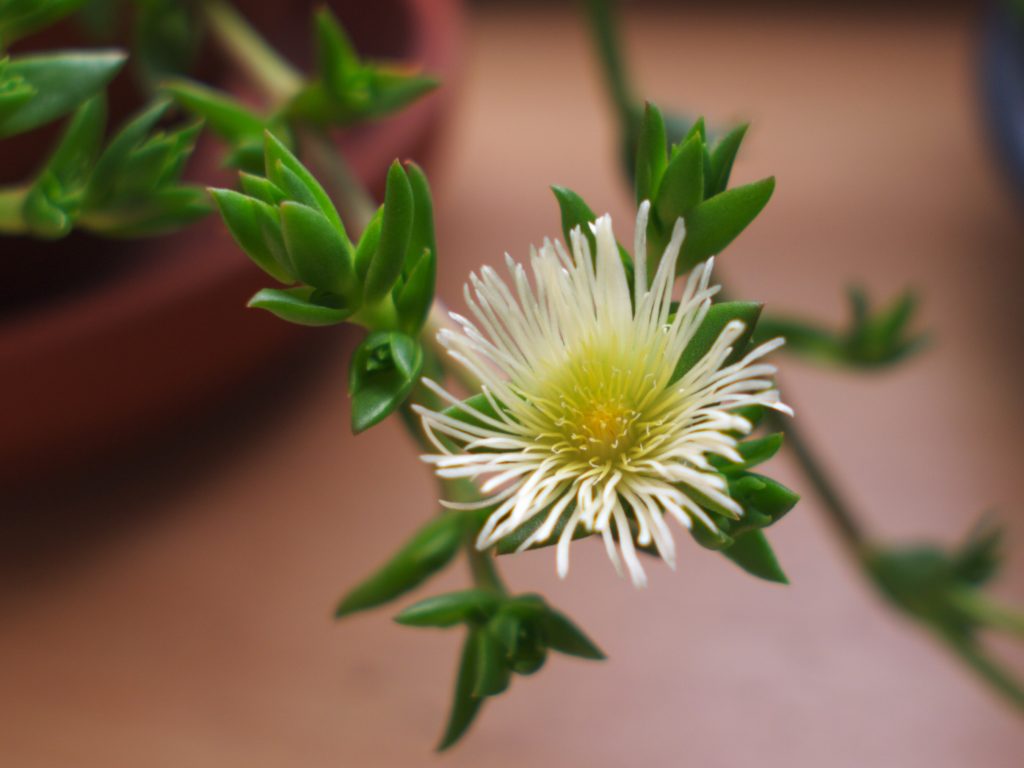
Sceletium tortuosum is a succulent plant indigenous to the arid regions of South Africa’s Northern, Western, and Eastern Cape. Long before it appeared in a laboratory, it was central to the culture of the San and Khoikhoi peoples, who fermented and chewed the plant a preparation known as “kougoed,” Afrikaans for “chew-thing” to relieve thirst and fatigue, ease mild pain, and support mood and social wellbeing during long journeys across the Karoo.
Dutch colonial explorers documented its use as early as 1685, making it one of the oldest recorded psychoactive botanicals still in active scientific development today.
The Science: What Modern Research Has Found
Sceletium’s effects are attributed to a group of mesembrine-type alkaloids principally mesembrine, mesembrenone, mesembranol, and mesembrenol concentrated in the plant’s aerial parts. Two mechanisms of action have drawn the most scientific interest:
- Serotonin reuptake inhibition (SSRI-like activity): mesembrine has been shown to inhibit the serotonin transporter, offering a plausible biological basis for the plant’s traditional use in mood support.
- PDE4 (phosphodiesterase-4) inhibition: at lower concentrations, Sceletium alkaloids also modulate PDE4, a pathway implicated in inflammation and cognitive signalling — distinguishing kanna from a simple herbal SSRI and pointing toward broader neurocognitive applications.
That dual mechanism is what has pushed Sceletium out of the ethnobotanical literature and into controlled clinical research over the past decade, mostly using standardised, patented extracts such as Zembrin®:
- A randomised, placebo-controlled study in cognitively healthy adults found that daily supplementation improved cognitive flexibility and reaction time under stress conditions (Chiu et al., 2014).
- A separate trial in recreationally trained adults reported improvements in mood and visual-tracking performance after eight days of supplementation (Hoffman et al., 2020).
- A three-month safety study of 8mg and 25mg daily doses found no clinically significant changes in vital signs, liver function, or ECG readings, supporting a favourable early safety profile (Murbach et al., 2014).
Researchers writing in Current Neuropharmacology have gone as far as describing Sceletium as a traditional herbal medicine now navigating “modern-day regulatory systems” a phrase that captures exactly where this category sits: proven enough in early trials to attract serious investment, but not yet standardised enough to be treated as a mainstream pharmaceutical ingredient (Brendler et al., 2021).
Where the Advancement Is Still Needed
This is the part of the story that matters most to an operator like CINV. The scientific literature is consistent on one point: clinical evidence for Sceletium is real but still limited. Trial sizes remain small, dosing standards are inconsistent across studies, and — as with cannabis before regulation matured supply is fragmented across small-scale, non-GMP producers.
Three gaps stand out:
- Standardisation. Alkaloid concentration in raw Sceletium varies significantly by growing region, harvest timing, and fermentation method. Without standardised extraction, clinical results are difficult to compare or replicate at scale.
- Regulatory clarity. Sceletium is currently positioned in most markets as a dietary or herbal supplement rather than a registered medicine. Formal novel food and medicinal product pathways in the UK, EU, and US remain underdeveloped compared to the route now well-trodden by CBPMs.
- Sustainability of supply. Sceletium is listed on South Africa’s SANBI Red List of threatened plant species monitoring, which makes cultivated, traceable supply rather than wild harvesting essential to any credible long-term commercial use.
Every one of these gaps is, not coincidentally, the same set of problems CINV’s platform was built to solve for medical cannabis: standardised cultivation, full supply chain oversight, GMP-aligned processing, and a genuine clinical research programme designed to generate the peer-reviewed evidence regulators require.
Why This Fits CINV’s Platform
Our seed-to-patient model already gives us cultivation expertise, laboratory testing and Certificate of Analysis (COA) infrastructure, GMP and EU-GMP compliant processing, and critically the South African production footprint where Sceletium is indigenous and where much of the current cultivation and research activity is already based.
Rather than treating Sceletium as an unrelated diversification, CINV views it as an adjacent application of the same botanical bioscience platform: the same pharmacological rigour, the same regulated cultivation-to-formulation pipeline, and the same ambition to own the IP, data, and regulatory dossiers that convert operational expertise into long-term pharmaceutical value applied to a second neuroactive compound with a genuinely differentiated mechanism of action from THC and CBD.
JP Doran, Founder & CEO of CINV, put the strategy behind this expansion into words:
“At CINV, we’re always looking beyond our own backyard for the next breakthrough that can genuinely change a patient’s life. Medical cannabis proved that a plant, treated with the same rigour as any pharmaceutical, can become a safe and reliable medicine and we don’t think that story stops there. Sceletium is exactly the kind of discovery we actively search the globe for: a compound with real scientific promise, rooted in generations of traditional use, that just hasn’t had the standardisation and clinical backing it needs to reach patients safely and consistently. That’s the gap we exist to close. Our job is to take remarkable botanical science and build the infrastructure around it cultivation, quality control, clinical evidence so that patients everywhere can access it with total confidence in what they’re taking.”

The Road Ahead
Sceletium is roughly where medical cannabis was a decade ago: culturally established, pharmacologically promising, and short on the large-scale, standardised clinical trials that convert “traditional herbal medicine” into “clinically governed therapeutic.” Closing that gap will take exactly the kind of infrastructure CINV is built around cultivation oversight, quality-controlled extraction, and a formal clinical research programme pursuing peer-reviewed, evidence-backed development.
As CINV’s platform matures, Sceletium and other adjacent neuroactive botanicals represent the next stage of that strategy: taking indigenous South African plant science and giving it the pharmaceutical-grade rigour needed to reach patients responsibly.
References:
Brendler, T., Brinckmann, J. A., Feiter, U., Gericke, N., Lang, L., Pozharitskaya, O. N., & van Wyk, B. (2021). Sceletium for managing anxiety, depression and cognitive impairment: A traditional herbal medicine in modern-day regulatory systems. Current Neuropharmacology, 19(9), 1384–1400. https://doi.org/10.2174/1570159×19666210215124737
Chiu, S., Gericke, N., Farina-Woodbury, M., Badmaev, V., Raheb, H., Terpstra, K., … Goble, L. (2014). Proof-of-concept randomized controlled study of cognition effects of the proprietary extract Sceletium tortuosum (Zembrin) targeting phosphodiesterase-4 in cognitively healthy subjects: Implications for Alzheimer’s dementia. Evidence-Based Complementary and Alternative Medicine, 2014, 1–9. https://doi.org/10.1155/2014/682014
Hoffman, J. R., Markus, I., Dubnov-Raz, G., & Gepner, Y. (2020). Ergogenic effects of 8 days of Sceletium tortuosum supplementation on mood, visual tracking, and reaction in recreationally trained men and women. Journal of Strength and Conditioning Research, 34(9), 2476–2481. https://doi.org/10.1519/jsc.0000000000003693
Krstenansky, J. L. (2017). Mesembrine alkaloids: Review of their occurrence, chemistry, and pharmacology. Journal of Ethnopharmacology, 195, 10–19.
South African National Biodiversity Institute (SANBI). Red List of South African Plants. Accessed via SABPA, https://sabpa.africa/sceletium/